Power outages are frustrating enough on their own, but for many New Jersey homeowners, the trouble does not always end when the lights come back on. One of the most common issues we hear about after storms, high winds, lightning, utility interruptions, or sudden electrical fluctuations is a garage door opener that stops working properly.

You press the remote. Nothing happens. You try the wall button. Still nothing.
Maybe the opener has power, but the door will not move. Maybe the lights on the unit are behaving strangely. In some cases, the opener may simply need to be reset. In others, an electrical issue may have damaged part of the opener.
Before assuming that your garage door operator needs to be replaced, there is one simple step you can try at home: perform a hard reset.
Why Garage Door Openers Can Stop Working After a Power Outage
Modern garage door openers are more than just motors. They contain circuit boards, sensors, receivers, safety systems, lights, remotes, and other electronic components that depend on a stable electrical supply.
When the power goes out, the outage itself may not be the only issue. Electrical surges, voltage fluctuations, or a sudden return of power can sometimes affect sensitive components inside the opener.
That is why some homeowners discover that their residential opener is not working even though the rest of the electricity in the house has returned.
It may appear completely dead, partially responsive, or stuck in an unusual state. Sometimes the issue is temporary, and the opener can recover after a complete power cycle. Other times, an electrical component may have been damaged, and professional garage door service is needed.
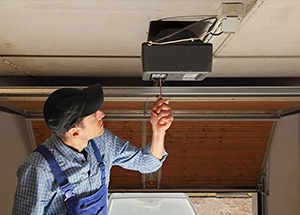
Garage Door Opener Not Working After a Power Outage? Try a 15-Minute Hard Reset
If your garage door opener stopped working after a power outage, electrical issue, or storm, try a hard reset before doing anything else.
Start by unplugging the opener from the electrical outlet.
Then leave it unplugged for approximately 15 minutes.
If it has a backup battery, disconnect or remove the battery as well. Many newer garage door openers include battery backup systems that allow the door to operate during a power outage.
If the battery remains connected, the opener may still be receiving power even after you unplug it from the wall. That means the unit may never fully shut down, which can prevent a true hard reset.
After about 15 minutes, reconnect the backup battery, plug the opener back into the outlet, and test the system again.
Try the wall control first, then test your remote controls.
In many cases, this simple reset may restore normal operation.
Why You Should Remove the Garage Door Opener Backup Battery
This is the step homeowners often overlook.
If your opener has battery backup, unplugging the unit from the wall does not necessarily mean the garage door opener is completely powered off.
The battery may continue supplying electricity to the opener, allowing certain electronic components to remain active. If you are trying to reset the system after an electrical problem, the opener needs to lose all power.
That is why we recommend disconnecting the backup battery during the 15-minute reset period.
Once the waiting period is complete, reconnect the battery before plugging the opener back into the wall.
What If the Garage Door Opener Still Does Not Work After the Reset?
If the hard reset does not solve the problem, the next step is to determine whether the issue is truly with the opener or another part of the garage door system.
The electrical outlet may not have power. A breaker may have tripped. A GFCI outlet elsewhere in the garage or home may have tripped and interrupted power to the garage door opener. The opener may have experienced electrical damage. The safety sensors may no longer be aligned or receiving power. A remote may need to be reprogrammed. The opener's internal electronics may also have been affected by a surge.
If you are comfortable doing so, you can check whether the outlet is working by plugging in another small electrical device.
You can also look at your electrical panel to see whether a breaker has tripped.
However, avoid opening the garage door opener itself or attempting electrical repairs inside the unit unless you are properly trained. Garage door openers and garage door systems contain electrical and mechanical components that can present safety risks.
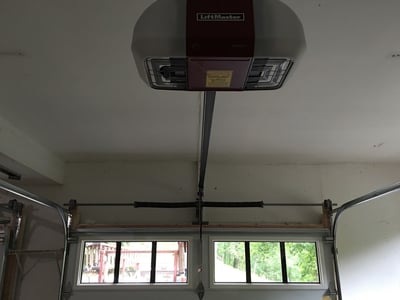

Can a Power Surge Damage a Garage Door Opener?
Yes, it is possible.
Power surges and electrical fluctuations can damage electronic devices throughout a home, and garage door openers are no exception.
An opener may have a damaged circuit board or another electrical component, even if there is no visible damage.
Some signs that it may have suffered electrical damage include:
✓ No response from the wall control or the remote controls
✓ Unusual or flashing lights on the opener
✓ Inconsistent garage door operation
✓ Unexplained clicking or unusual noises
✓ Failure to complete an opening or closing cycle
✓ Controls that suddenly stop communicating with the opener
✓ A burning smell or other signs of electrical damage
A professional garage door technician can inspect the opener and determine whether a specific component can be repaired or whether replacing the opener makes more sense.
The Garage Door Opener May Not Be the Only Problem
A power outage and a garage door problem may happen at the same time without the opener being the only issue.
Garage doors rely on several components working together. Springs help counterbalance the weight of the door. Cables, rollers, tracks, hinges, safety sensors, and the garage door opener itself all play different roles.
For example, if the opener makes noise but the garage door does not move, the problem could be mechanical rather than electrical.
If the garage door feels extremely heavy when operated manually, there may be a spring issue.
If the garage door starts closing and then suddenly reverses, the safety sensors may be involved.
This is why a professional garage door inspection can be valuable when a simple hard reset does not solve the problem.
A technician can evaluate the entire system instead of focusing only on the garage door opener.
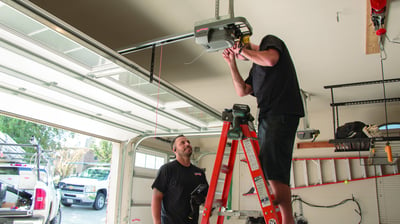
What Not to Do When Your Garage Door Opener Stops Working
When a garage door opener stops working, repeatedly pressing the remote usually does not help.
Avoid forcing the garage door open or closed with the opener if the system sounds strained, makes unusual noises, or appears to be struggling.
You should also never attempt to adjust or repair garage door springs, cables, or other high-tension components yourself. These parts can cause serious injuries if they are handled improperly.
If you disengage the opener using the emergency release cord, proceed with caution.
A garage door with a damaged or broken spring may be much heavier than expected and could move suddenly.
When in doubt, leave the garage door in place and contact a professional garage door service company.
Why New Jersey Weather Can Affect Garage Door Openers
New Jersey weather can be unpredictable throughout the year.
Summer thunderstorms can bring lightning, high winds, heavy rainfall, and sudden power outages. Tropical storms can interrupt electrical service for hours or even days in some areas.
During the colder months, snow, ice, strong winds, fallen branches, and winter storms can also cause utility interruptions.
Even brief power fluctuations may affect sensitive electronics inside your opener.
That makes it helpful for Central New Jersey homeowners to know what to do when a garage door opener stops responding after the electricity comes back on.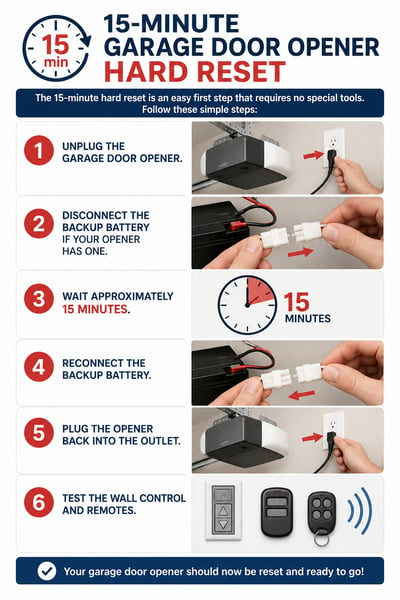
If the opener begins working normally again, the problem may simply have required a complete power cycle.
When Should You Call a Garage Door Professional?
If your opener is still not working after a hard reset, it may be time to schedule professional garage door service.
You should also consider calling a technician if the opener works inconsistently, the garage door stops halfway, the opener makes unusual sounds, the door reverses unexpectedly, the motor runs but the door does not move, or you notice a burning smell or signs of electrical damage.
A trained garage door technician can inspect the complete system instead of simply guessing which part has failed.
That can help determine whether you need a minor repair, a replacement component, a new circuit board, or a complete garage door opener replacement.
Keeping these steps in mind can save time and may help you identify whether the problem requires professional garage door service nearby.
Garage Door Opener Repair in Central New Jersey
If your opener stopped working after a power outage, storm, or electrical issue, Overhead Door Company of Central Jersey can help.
We provide garage door opener repair, garage door service, maintenance, and replacement for homeowners throughout Central New Jersey.
Our technicians can inspect your garage door opener, determine whether an electrical issue caused damage, and recommend an appropriate solution based on the condition of your system.
If your garage door opener is still not working after the reset, call us at 908-521-4728.
Whether the problem started after a New Jersey thunderstorm, power outage, electrical surge, or unexplained electrical interruption, our team can help identify the problem and get your garage door operating safely and reliably again.