A warehouse door that works fine on paper can become a daily problem once trucks are backed up, temperatures drop, or a busy crew starts cycling it 50 times a day. That is why understanding the different types of commercial garage doors matters before you buy, replace, or spec one for a project. The right choice affects security, workflow, energy costs, maintenance, and how long the door holds up under real use.

Why the types of commercial garage doors matter
Commercial doors are not one-size-fits-all. A small auto shop, a municipal building, a refrigerated facility, and a distribution center may all need overhead access, but the demands on the door are completely different.
Some buildings need insulation and tight weather seals. Others care more about speed, visibility, ventilation, or resistance to impact. Ceiling clearance, opening size, traffic patterns, and code requirements also shape the decision. A door that is ideal in one setting may be the wrong fit in another.
Sectional doors
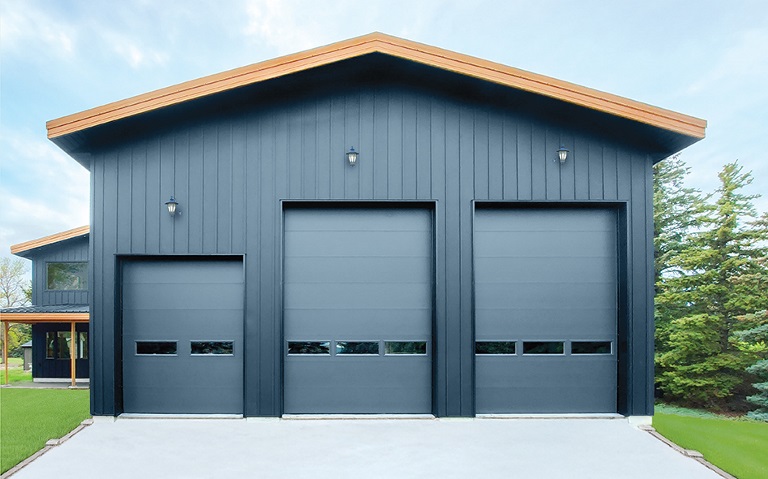
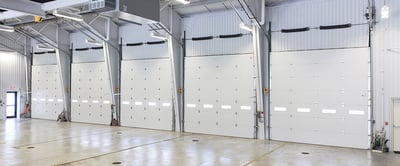
Sectional doors are one of the most common commercial options because they work in a wide range of buildings. These doors are made of hinged panels that travel upward on tracks and rest overhead when open.
For many properties, sectional doors strike the best balance between durability, insulation options, and cost. They can be built in steel, aluminum, fiberglass, or insulated sandwich construction, depending on the application. They also work well with windows for visibility and can be paired with commercial operators for frequent daily use.
The trade-off is space. Sectional doors need interior headroom and backroom for the track system. In facilities with limited ceiling space or unusual framing conditions, another door style may fit better.
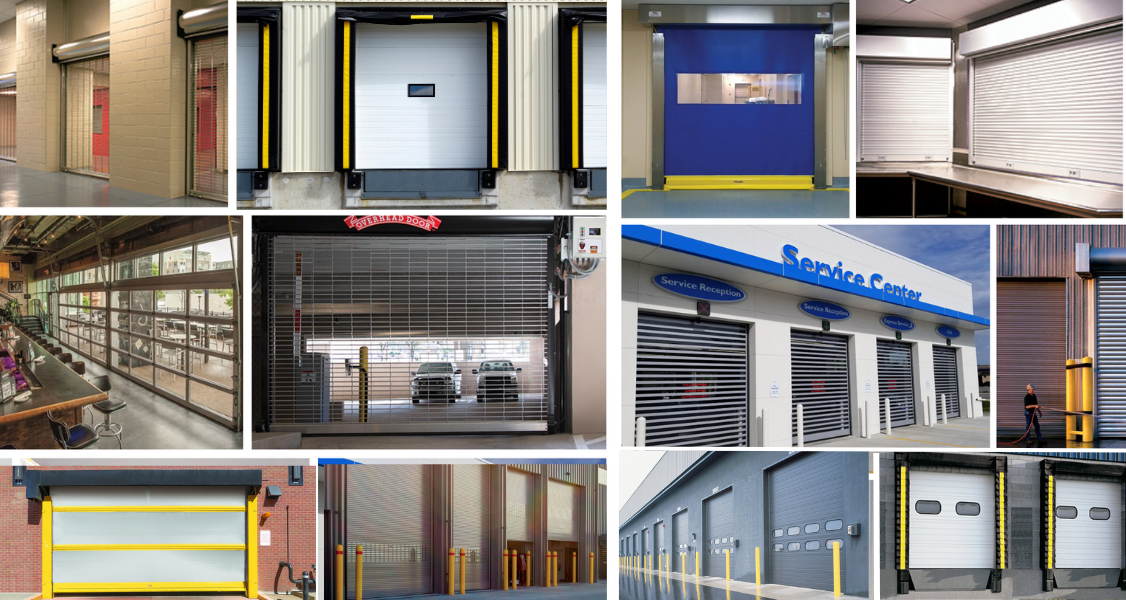
Best uses for sectional doors: These doors are a strong match for warehouses, service bays, fire stations, fleet buildings, and many light industrial properties. They also make sense where energy efficiency matters, since insulated models can help reduce heat loss and improve comfort inside the building.
Rolling steel doors
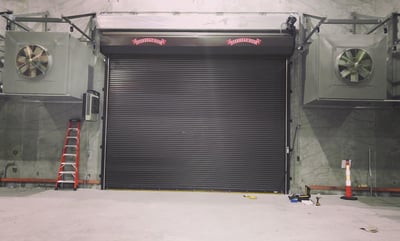
Rolling steel doors are built for strength and compact operation. Instead of moving back along overhead tracks, the slats roll into a coil above the opening. That design makes them useful in buildings where headroom is limited or where interior space needs to stay clear.
These doors are often chosen for security. They are common at loading docks, storage areas, service counters, and industrial openings that take heavy use. Because the curtain rolls into a compact coil, they can also be a practical option where a sectional door would interfere with lights, piping, or mechanical systems.
The downside is that rolling steel doors are usually more utilitarian in appearance, and depending on the model, they may offer less thermal performance than a heavily insulated sectional door. If insulation is a top priority, it is worth comparing specific door constructions rather than assuming all steel doors perform the same.
High-speed doors
High-speed doors are designed to open and close fast, which helps control traffic flow, reduce temperature loss, and improve efficiency in busy operations. They are common in distribution centers, food facilities, manufacturing plants, parking structures, and buildings where forklifts move constantly.
Speed is the clear advantage. A faster door means less waiting, less exposure to outdoor air, and fewer chances for the opening to be left open longer than necessary. In some operations, this directly affects productivity and climate control.
That said, high-speed doors are not always the standalone answer for exterior security. In some facilities, they are used with another door system or selected with upgraded materials for more demanding exterior openings. The right choice depends on traffic volume, wind load needs, and how much abuse the door is expected to take.

Aluminum full-view doors
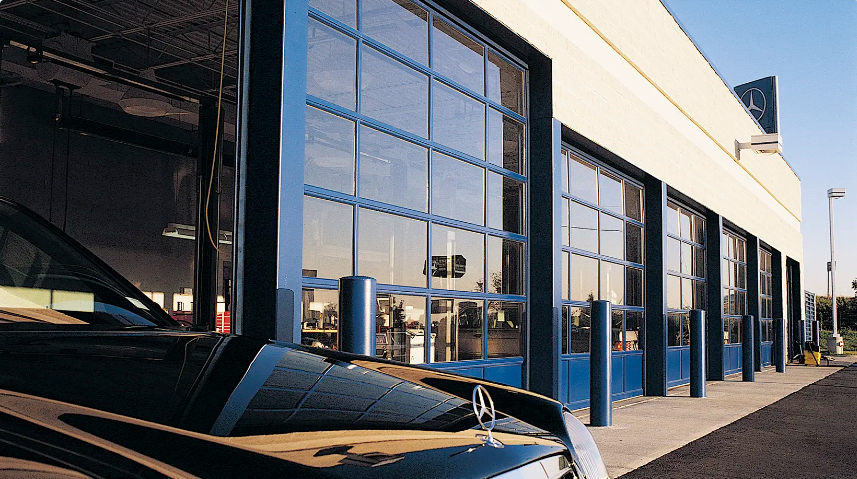
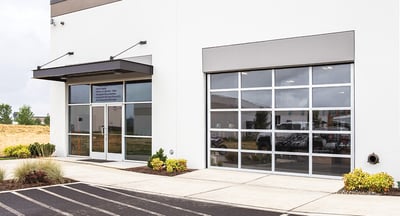
Aluminum full-view doors use an aluminum frame with large glass or glazing sections. They are often associated with automotive service centers, firehouses, retail spaces, restaurants, and modern commercial buildings that want daylight and visibility.
These doors can make a space feel more open and professional, especially in customer-facing environments. For service operations, they also improve sightlines and can help bring natural light into work areas.
Their main limitation is that they are usually selected as much for appearance as for function. They may not be the best fit for rough industrial environments where impact resistance, insulation value, or privacy takes priority. Glass options, frame thickness, and finish quality matter a lot here, so specification details should not be treated as secondary.
Fire-rated doors
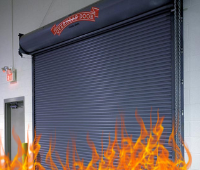
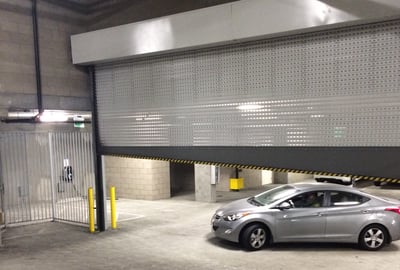
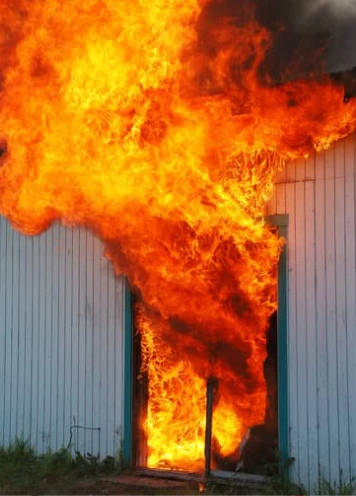
Fire-rated doors are designed to help contain fire and smoke by closing automatically when triggered by an alarm or detector system. In many buildings, these are not optional upgrades. They are part of the code and life safety requirements for specific openings.
These doors are commonly installed in factories, parking garages, warehouses, and openings that separate different fire zones. They may look similar to certain rolling steel doors, but their purpose and compliance requirements are different.
What matters most with fire doors is not just installation, but ongoing testing and maintenance. A fire-rated door that has not been properly inspected or drop tested can become a liability. For facility managers, this is where long-term service planning matters just as much as the initial purchase.
Counter shutters and security grilles
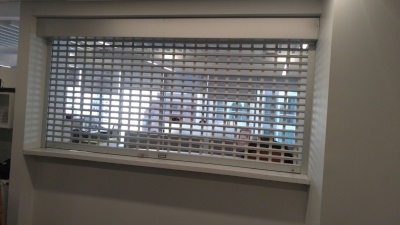
Not every commercial opening needs a full-size overhead door. Counter shutters and security grilles are designed for smaller openings where access control and security are the main concern.
Counter shutters are often used in concession stands, pharmacies, cafeterias, and service windows. Security grilles are common in retail storefronts, parking garages, and interior security partitions where visibility and airflow are still important.
These products serve a different purpose than loading dock or vehicle access doors, but they are still part of the broader commercial door category. If a building has multiple opening types, it often makes sense to coordinate them through one service provider to keep maintenance and repair simpler.

Sheet doors
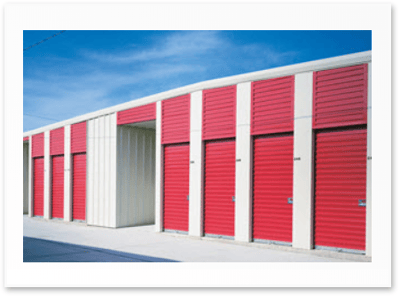
Sheet doors are typically lighter-duty rolling doors used in self-storage facilities, smaller commercial spaces, and some outbuildings. They are economical and simple, which makes them attractive when the opening does not face heavy traffic or demanding environmental conditions.
The lower upfront cost can be a benefit, but it comes with limits. Sheet doors are generally not the right answer for high-cycle industrial use, frequent vehicle impact, or applications where insulation and long-term durability are critical. They work best when expectations are realistic and matched to the door's duty level.
How to choose among the different types of commercial garage doors
The best door starts with the opening and the operation, not just the budget. A property owner may be focused on cost, while a facility manager may be more concerned with downtime, operator reliability, or compliance. Both are valid concerns, and the right recommendation usually balances short-term cost with long-term performance.
Start with the basics. How often will the door cycle each day? Is the opening interior or exterior? Does the space need insulation, visibility, ventilation, or fire protection? Are forklifts or trucks moving through the opening? Is there enough room for tracks, or would a coiling door make more sense?
From there, think about serviceability. Commercial doors do not just need to fit the opening. They need to be repairable, maintainable, and supported with the right springs, cables, operators, and safety accessories. A cheaper door that creates repeated service calls is rarely the lower-cost option over time.
In Central New Jersey, weather also matters. Wind exposure, temperature swings, and moisture can all affect door performance, especially on exterior openings and loading areas. Insulation, perimeter seals, corrosion resistance, and operator quality should be part of the conversation early, not added later as an afterthought.
Installation and maintenance matter as much as the door type
Even the best commercial door can underperform if it is installed poorly or left without regular service. Track alignment, spring sizing, operator setup, safety devices, and weather sealing all affect how the door performs day after day.
That is especially true for high-cycle openings and code-related products like fire doors. Preventive maintenance helps catch worn rollers, cable issues, spring fatigue, and operator problems before they shut down an opening at the worst possible time. For many facilities, regular maintenance is not just about avoiding repairs. It is about protecting operations.
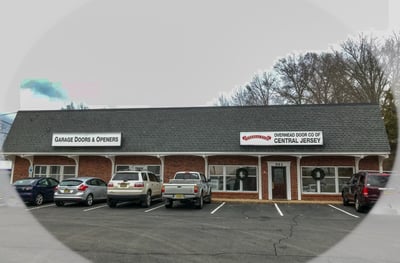
Overhead Door Company of Central Jersey works with business owners, contractors, and facility teams that need commercial doors chosen for real conditions, not just catalog descriptions. When the opening, traffic level, and service demands are evaluated properly, the door is far more likely to perform the way it should.
If you are comparing types of commercial garage doors, the smartest move is to look past the basic category and focus on how the door will actually be used. A door is part of the building, but it is also part of the workday. Choosing the right one usually pays off in fewer interruptions, safer operation, and less frustration over time.
Choosing the right commercial garage door is essential for the safety, security, and efficiency of your facility. Whether you operate a warehouse, distribution center, retail business, parking garage, or manufacturing plant, selecting the right overhead door for your specific application can improve workflow, reduce maintenance costs, and enhance long-term performance. Installing the wrong type of commercial door can lead to operational delays, increased repair expenses, and unnecessary downtime.
Our experienced team is here to help you choose the ideal commercial overhead door for your business. We offer expert guidance on sectional steel doors, rolling steel doors, high-speed doors, fire-rated doors, full-view aluminum doors, counter doors, sheet doors, and other commercial access solutions. Call us today at 908-722-5785 or send us an email to comm@overheaddoorco.com.
For over 50 years, Overhead Door Company of Central Jersey has been the trusted choice for commercial garage door installation, repair, and maintenance throughout Central Jersey, delivering dependable products, expert craftsmanship, and exceptional customer service.