A garage door usually gives you a warning before it fails. It gets louder, moves unevenly, hesitates on the way down, or leaves a small gap at the floor that was not there before. A good garage door tune-up checklist helps you catch those issues early, before they turn into a broken spring, a stuck door, or an opener that burns itself out trying to compensate.

For homeowners, that means fewer surprise repairs and a safer door for daily use. For commercial properties, it means less downtime, better security, and fewer disruptions to traffic flow. The exact checklist can vary depending on the age of the door, the type of opener, and how often the system cycles each day, but the core inspection points stay the same.
What a garage door tune-up checklist should cover
A proper tune-up is not just about spraying lubricant on a few hinges and calling it done. The goal is to check how the full system works together: door sections, tracks, rollers, springs, cables, hardware, seals, and opener controls.
If one part is worn, the rest of the system often starts compensating. A door with tired springs may still open for a while, but the opener has to work harder. Rollers with worn bearings may not seem urgent at first, but they add noise, drag, and strain. A cracked bottom seal may look minor, yet it can let in water, dirt, rodents, and cold air.
That is why a tune-up should look at both performance and safety, not just visible damage.
Start with door movement and noise
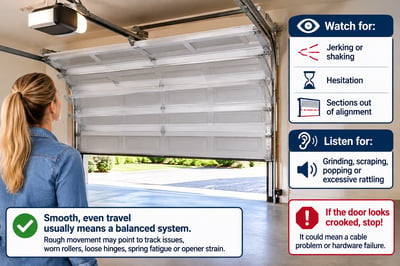
Before touching any hardware, watch the door complete a full open-and-close cycle. Look for jerking, shaking, hesitation, or sections that appear out of alignment. Listen for grinding, scraping, popping, or excessive rattling.
This first step tells you a lot. Smooth, even travel usually points to a balanced system. Rough movement can suggest track issues, worn rollers, loose hinges, spring fatigue, or opener strain. If the door looks crooked as it moves, stop there. That can mean a cable problem or hardware failure, and continued use can make the situation worse.
Check the hardware that holds the system together
Garage doors move up and down with a surprising amount of vibration. Over time, brackets, roller mounts, and hinge fasteners can loosen. A tune-up should include a careful review of visible nuts, bolts, and mounting points.
This is not the same as taking the system apart. It means checking for loose hardware, bent brackets, worn hinge points, and signs that parts are shifting under stress. Rust around mounting points can also signal moisture exposure or age-related wear.
There is a limit here. Hardware connected to spring systems should not be adjusted casually. Torsion and extension spring assemblies carry significant tension, and the wrong move can cause serious injury. A checklist should help identify problems, but not encourage unsafe repairs.
Inspect rollers and tracks closely
Rollers should move smoothly inside the tracks without wobbling, binding, or making excessive noise. Steel rollers can last a long time, but they do wear. Nylon rollers often run quieter, though they can crack or flatten over time.
Tracks should be free of debris and obvious damage. Dents, bends, and misalignment can keep the door from traveling properly. The tracks also need to stay clear. Dirt buildup, hardened grease, or small obstructions can interfere with roller movement and create drag.
One common mistake is applying heavy grease inside the tracks. In most cases, that attracts more dirt and makes performance worse, not better. Tracks generally need to be clean and properly aligned rather than coated.
Review springs and cables with caution
No garage door tune-up checklist is complete without springs and cables, because these are some of the most important and most stressed parts in the system. Springs do the heavy lifting. Cables support controlled movement and help keep the door operating evenly.
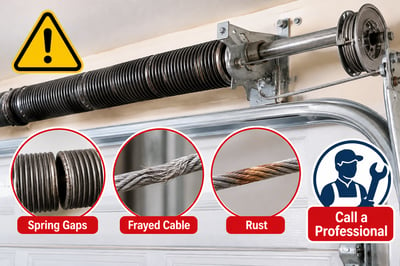
Look for visible fraying, rust, separation in the cable strands, gaps in torsion springs, or extension springs that appear stretched or uneven. These are warning signs, not do-it-yourself tasks. If you see them, it is time for professional service.
This is one of the clearest cases where it depends on who is doing the inspection. A homeowner or facility manager can spot wear and report it. Adjustment or replacement should be left to trained technicians with the right tools and procedures.

Test balance and opener strain
A balanced door puts less stress on the opener and usually lasts longer. To check the balance on a standard residential door, disconnect the opener using the release cord and carefully lift the door by hand. It should move smoothly and stay near mid-travel without dropping or shooting upward.
If the door feels unusually heavy or will not stay in place, the spring system may be out of balance. Reconnect the opener after the test and do not continue using the door if the imbalance is severe.
On commercial systems, balance checks may involve heavier components, larger operators, and more specialized safety controls. The principle is the same, but the stakes are higher. If a commercial overhead door starts putting abnormal strain on the operator, it can affect access, scheduling, and safety very quickly.
Lubricate the right parts
Lubrication helps reduce friction and noise, but only when applied correctly. Hinges, roller bearings, spring coils, and bearing plates may need garage-door-safe lubricant. Chains or screw drives may also need attention depending on the opener design.
More is not better. Over-lubrication can collect dust and grime, which creates its own problems. If the door is still noisy after proper lubrication, that usually points to wear or misalignment rather than a simple maintenance miss.
If you are unsure which lubricant is appropriate, do not guess. Using the wrong product can damage components or reduce performance.
Check the opener, sensors, and safety features
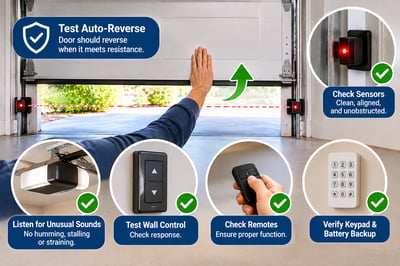
A tune-up should always include the automatic opener system. Start with the photo-eye sensors near the floor. Make sure they are clean, aligned, and free from blockage. If the door reverses unpredictably or refuses to close, sensor issues are often the first place to look.
Then test the auto-reverse function. The door should reverse when it meets resistance and should not continue forcing downward pressure. Also, check the wall control, remotes, keypad, and battery backup if the system has one.
Pay attention to opener speed and sound. An opener that hums, stalls, or strains may be compensating for a door problem rather than suffering from an opener problem alone. Replacing the opener without addressing the door system can leave the root cause untouched.
Don’t overlook seals and door sections
A garage door tune-up checklist should also include the condition of the garage door panels and perimeter seals. Cracks, warping, dents, and separation between sections can affect performance as well as appearance. On insulated doors, visible damage may also reduce energy efficiency.
Bottom seals and perimeter weatherstripping matter more than many people realize. In New Jersey, worn seals can let in wind, moisture, debris, and temperature swings that affect the garage interior. In commercial settings, damaged seals can also affect cleanliness, pest control, and conditioned spaces near the opening.
If the door closes but leaves uneven daylight at the floor or sides, the issue may be seal wear, floor settlement, track alignment, or a combination of factors.
When a checklist is enough, and when service is the smarter move
Some maintenance items are simple. Cleaning tracks, checking sensor alignment, listening for unusual noise, and looking for visible wear are all reasonable parts of routine care. But a checklist is only useful if it leads to the right decision.
If the door is out of balance, the cables look frayed, the spring shows damage, the track is bent, or the opener's safety features do not respond correctly, professional service is the safer choice. That is especially true for heavier wood doors, insulated steel doors, high-cycle commercial doors, and loading dock equipment.
For many properties, scheduled preventive maintenance makes more sense than waiting for symptoms. A residential door that runs several times a day and a commercial door that cycles constantly do not age at the same pace. The more the system is used, the less room there is for guesswork.
A reliable tune-up is really about protecting the entire system, not just one part. When the door runs smoothly, seals properly, and responds the way it should, you get better safety, less noise, and fewer costly surprises. If anything on your checklist looks off, trust that early attention is usually the cheaper fix.
Keeping your garage door in good working condition starts with regular preventive maintenance. Overhead Door Company of Central Jersey provides professional residential garage door tune-ups to help identify wear, improve performance, and keep your door operating safely and reliably. Don't wait for a minor issue to become an unexpected breakdown. Schedule your garage door maintenance today! Call 908-722-5785 or send an email to resi@overheaddoorco.com.